Keep Covered California When You Take a Temporary Out-of-State Work Assignment
Keep Covered California During Temporary Out-of-State Work

If you live in California (for example, in the Inland Empire or the Coachella Valley) and you’re taking a temporary work assignment in another state, the practical goal is usually the same: keep your Covered California coverage and avoid a surprise bill at tax time. In many cases, the path forward is less about “starting over” and more about making sure your Covered California account reflects what actually changed—especially your California residency status, your household details, and your income estimate.
This article is a planning guide—not legal or tax advice—and it’s written for the real-world scenario where you still consider California home, but work pulls you to Arizona, Nevada, Washington, Texas, or Colorado for a while.
1) The buyer question: can you keep Covered California if you’re temporarily working out of state?
In plain terms: it depends on whether you’re still a California resident for the period you’re enrolled, and whether your plan can realistically serve you while you’re away.
Two things can be true at once:
- You may remain eligible to keep a Covered California plan because you still live in California (temporary travel for work isn’t automatically a “move”).
- Your plan’s provider network may be California-based, which can make routine care out of state expensive or inconvenient.
So the buyer-intent answer is: yes, you may be able to keep Covered California while working out of state temporarily, but you should confirm (a) whether you’re still a California resident for enrollment purposes and (b) how your plan handles out-of-area care.
2) Step 1: Clarify whether this is a temporary assignment or a true move
Before you change anything in your application, get clear on what you’re actually doing. The words you use matter because “moving” can trigger plan changes, new eligibility pathways, or a different state’s marketplace.
Ask yourself these clarifying questions:
- Are you keeping your California home address (lease/mortgage), and do you intend to return after the assignment?
- Are you relocating your whole household, or is it just you traveling for work?
- Are you changing your driver’s license, voter registration, or filing status in a way that indicates you’re no longer a California resident?
- Is your employer changing your job location on payroll in a way that changes state withholding or reported income?
Illustrative example (not a claim about your situation):
- Temporary assignment: You live in Riverside County, keep your California home, and spend 3–4 months in Texas for a project, then return. You may still be a California resident.
- True move: You end your California lease, relocate your household to Colorado, and establish residency there. That’s more consistent with leaving California.
If it’s a true move out of California, you may need to transition away from Covered California and explore coverage in the new state. If it’s temporary, the focus is usually on accurate updates (income, household, mailing address if needed) without accidentally reporting a permanent move.
3) Step 2: What to update in your Covered California application (and what not to guess on)
When you’re working out of state temporarily, the most common updates people need are about income and contact details—not necessarily a full “move.” The right updates depend on what changed.
A) Income estimate (the most important for subsidy accuracy)
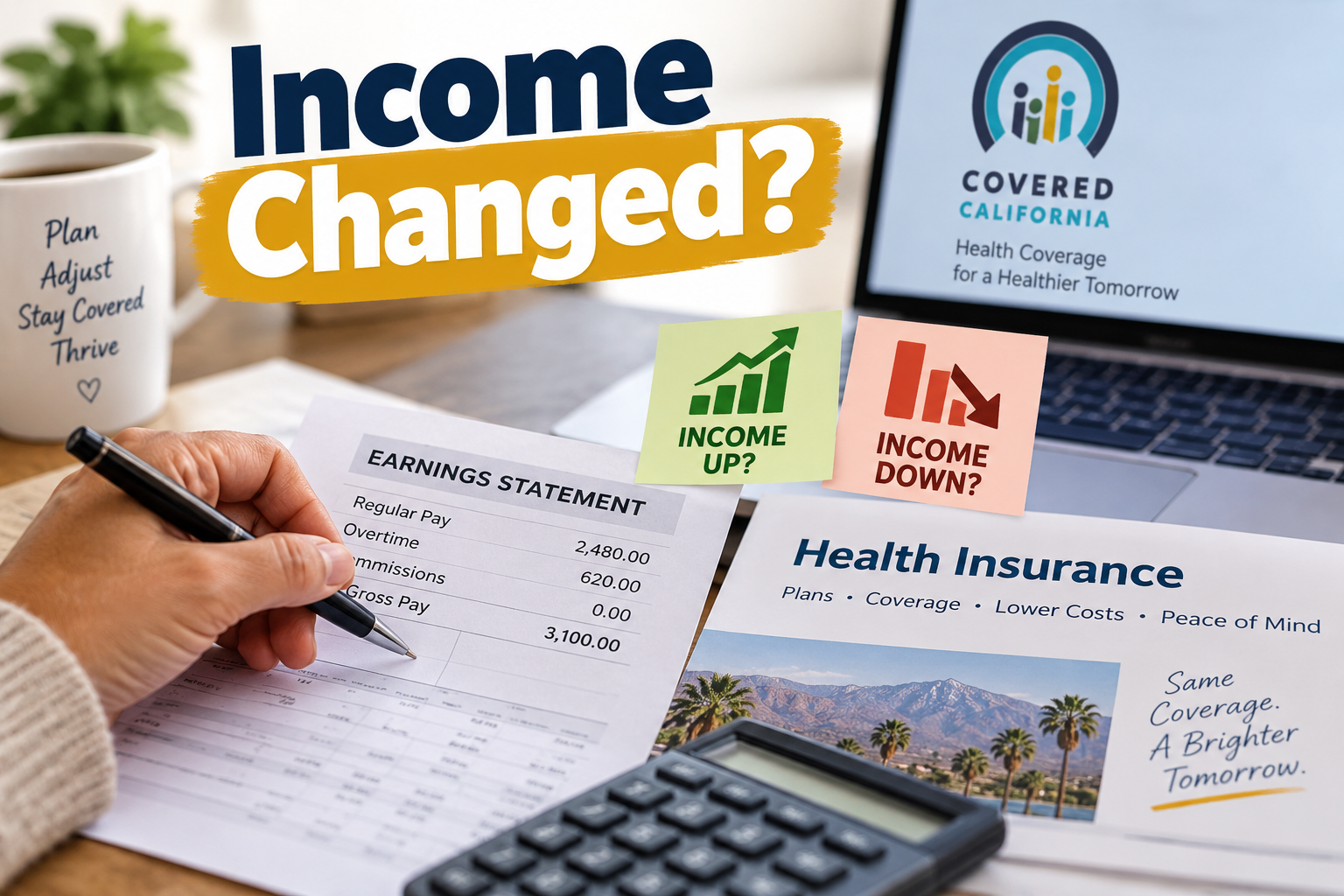
If your assignment changes your pay (overtime, per diem, shift differentials, bonuses, commission changes, or a gap between projects), update your projected annual income.
What to do:
- Estimate your total income for the year as accurately as you can based on what you know now.
- If the assignment includes variable pay, consider using a conservative estimate and revisiting it when you have a few pay stubs that show the new pattern.
What not to do:
- Don’t “set it and forget it” if your income changes mid-year. Subsidy eligibility is tied to the year’s total, and big swings can create repayment risk.
B) Address: physical address vs. mailing address
If you still live in California but will receive mail elsewhere temporarily, you may be able to update a mailing address while keeping your California residence address (if that reflects reality).
What to do:
- Keep your residence address truthful and consistent with where you live/maintain residency.
- Use a mailing address update if you need plan notices or verification letters sent somewhere else.
What not to do:
- Don’t report a permanent out-of-state move if you’re not actually moving. That can trigger a chain of changes you didn’t intend.
C) Household changes
Temporary work travel doesn’t automatically change your household, but sometimes it comes with life changes that do:
- Marriage or divorce
- A new baby
- A dependent moving in/out
If any of those happen, update them promptly because they can change both plan options and financial help.
D) Employer coverage offers (if your job situation changes)
If the assignment comes with a new employer, a new benefits package, or an offer of employer-sponsored health insurance, that can affect what you qualify for through Covered California.
What to do:
- Report changes in employer coverage offers when they occur.
- If you’re unsure whether an offer counts as “affordable” or “minimum value,” ask before you make a plan change.
4) Step 3: Common pitfalls that trigger subsidy or plan problems (and how to avoid them)
Here are the issues that most often create headaches for people who are temporarily out of state.
Pitfall 1: Assuming your plan works the same out of state
Many Covered California plans are built around California provider networks. Even if emergencies are covered, routine care may be out-of-network.
What to do:
- Call the member services number on your insurance card and ask how urgent care, labs, prescriptions, and non-emergency specialist visits work out of state.
- If you expect ongoing care while away, ask what options you have (for example, whether a different plan design would fit better during the assignment).
Pitfall 2: Updating the application in a way that looks like you left California
If you change your residence address to an out-of-state address, you may trigger eligibility questions or plan discontinuation.
What to do:
- Separate “where I’m temporarily staying” from “where I live” if California remains your home.
- If you’re not sure how to reflect it correctly, pause and ask for help before submitting changes.
Pitfall 3: Not updating income when assignment pay changes
Income changes are one of the biggest drivers of subsidy reconciliation issues.
What to do:
- Update your income estimate when you have a known change (new base pay, known bonus, known reduction, or a work gap).
- Keep a simple log of when your income changed and why (helpful if you later need to explain the estimate).
Pitfall 4: Missing verification requests because you’re not home
Covered California may request documents. If you’re traveling, you might miss mail or deadlines.
What to do:
- Make sure your online account access is working (login, password, security steps).
- Consider a reliable mailing address and check your account messages regularly.
Pitfall 5: Confusing “temporary travel” with a Special Enrollment Period (SEP) move
A true move can open an SEP. Temporary travel usually doesn’t.
What to do:
- If you need to change plans outside Open Enrollment, confirm whether you actually have a qualifying life event.
5) Step 4: A quick decision checklist + what to gather before you call
If you want this handled quickly and cleanly, gather the details below before you update anything.
Decision checklist:
- Am I still a California resident during this assignment?
- Do I need only a mailing address update, or did my residence actually change?
- Did my income change (up or down), and is it likely to stay that way?
- Will I need routine care out of state, and does my current plan support that?
- Did my employer offer new health coverage?
What to gather:
- Your current plan information (carrier name, plan name if available)
- Your Covered California login/email and any recent notices
- Your best estimate of annual income (and what changed)
- Any employer benefits documents if you received a new offer
- The states involved (where you live in California and where you’ll be working temporarily)
If you’re based in the Inland Empire or the Coachella Valley and you’re traveling for work to Arizona, Nevada, Washington, Texas, or Colorado, the key is to treat this like an accuracy project: keep your Covered California information aligned with reality, and confirm how your plan functions while you’re away so you’re not surprised when you try to use it.
If you want, I can help you think through what to update, what to leave alone, and what questions to ask your plan so you can keep coverage steady during the assignment.
If you’re in the Inland Empire or the Coachella Valley and you’re taking a temporary assignment out of state, contact
Charise Karjala, Health Markets Insurance, to review what (if anything) you should update in
Covered California so your coverage and subsidy stay aligned with your real situation.